Monday, June 26, 2006

GPS - an Alternative to the Roadmap

In my earlier post I gave you details of two websites that can assist you in planning your route when undertaking a journey. A more high-tech solution is provided by GPS (Global Positioning System) satellite navigation (or SatNav, for short) devices, which have been falling in price dramatically over the past couple of years. These devices are designed to be mounted in your car and they provide a real-time map of your position, together with verbal instructions preparing you for junctions and turns in advance.

The majority of these devices come with software that you install on your PC and a set of maps covering certain global regions. Depending on the model you purchase you may receive either UK and Ireland maps with your device or maps for all of Europe (including UK and Ireland). You can generally purchase maps for other regions, such as the US and Australia.

PC Medic has been using a Navman GPS unit for about two years now and the experience has been very positive overall. The unit that we use is essentially a PDA, running Pocket PC Windows, with a built-in GPS receiver. The software that came with this unit is Navman SmartST and maps of all European countries are included. It has to be said that mapping support for Ireland, outside of the principal cities, is very poor. So, while you get excellent coverage of Dublin, and its environs, you cannot plot a route from, say, Ashbourne to Trim.

You will generally use the device to help you find the route between your current location and a destination. As the unit always knows your current location, from the satellites it uses for positioning, it is simply a matter of inputting your destination (town and street) in the appropriate data entry window and selecting Go. The unit will then calculate the most appropriate route (giving consideration for one-way streets, etc). The route is displayed as a moving map on the device's screen and the road you should be following is highlighted in red. As you come to turns and junctions that you must negotiate, these are displayed as light green arrows, clearly showing the direction you must follow.

At the bottom of the screen the current street or road name is displayed. At the bottom right of the screen the remaining distance that you must travel until the next action you must take is displayed. At the top of the screen the next action that you must take and the name of the road or street that you will turn onto is displayed. The top left corner of the map displays a graphical image of the next turn you will have to take (a left turn in the screenshot opposite).

In addition to the map and on-screen directions, you can choose to have all the directions clearly spoken to you by either a male or female voice. These directions take the form of "In 200 metres, at the roundabout, take the third exit". When you are actually on the roundabout, it will announce "Exit now" as you approach the third exit. This is a particularly useful feature and we have found that you can, in most cases, navigate complex routes by following the spoken directions and not looking at the display at all.

Perhaps one of the best features is that if you miss a turn, the system will recalculate a new route for you in 10-15 seconds to get you back on track - so it is practically impossible to get lost. We use the system almost daily for navigating the Dublin suburbs and have used it in France, Spain and the southwest US and it has not let us down yet.

However, there are some limitations. First off, the maps are out of date as soon as you buy the unit and they are not updated regularly. For example, the maps on our unit have the M50 ending at Ballinteer and all the new housing estates that have been built in the past two years are not included. This may or may not be a problem for you - it has rarely been an issue in our own experience.

As I mentioned earlier, Ireland is poorly mapped outside of the main population centres, so it is of limited use in Ireland outside of the main cities. Note, however, that rural areas in other European countries seem to be well mapped.

You should not follow the directions on the unit blindly as there may be traffic restrictions introduced since the mapping software was issued. For example, travelling from Stillorgan to Rathfarnham the unit will instruct me to take a right turn at the bottom of Upper Kilmacud Road onto Main St., Dundrum. There is, however, no right turn permitted at this junction!

Finally, as the GPS system requires line-of-sight to the satellites for it to get a fix, it doesn't work well in cities with high-rise buildings all around, such as Manhattan. Also, when you enter long tunnels, it may take the unit a minute or two to re-establish a satellite fix when you emerge from the tunnel.

Notwithstanding these limitations, a SatNav system certainly does contribute to stress-free travel when on unfamilar roads. I notice that there are more and more taxis in Dublin using SatNav these days and it can only be a few years from the day that SatNav will be included as standard on all new cars (it is available as an option on a number of prestige brands). In the meantime, you can fit a SatNav system for under €300 from one of the main manufacturers such as Navman, TomTom or Garmin, or visit a Halfords branch or Global Positioning Systems for a selection.

Wednesday, June 21, 2006

On the right Road?

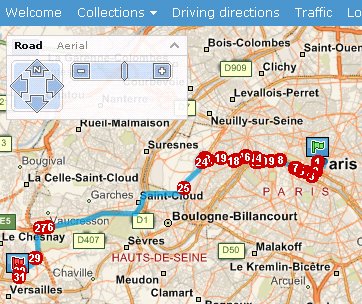
It's that time of the year again when your thoughts turn to packing up the car and heading off on holiday for a week or so for a bit of a break and, hopefully, some sunshine. Before you head off, it's normally a good idea to get out the maps and plan your route in advance, particularly if you are heading to a country whose roads are not known to you. This is where route planning software can really help out. There are a number of commercial offerings out there to help you on your way, but I want to point you to a couple of free ones.

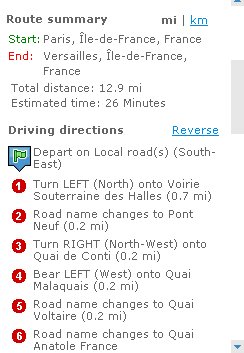
The first is provided courtesy of the AA's website and allows you to get detailed directions of a journey between any two points in Ireland, the UK or Europe. It also allows you to route via a particular waypoint that you want to visit and to avoid motorways and toll routes if you so choose. What it doesn't provide you with is a detailed map for your journey.

This is where Microsoft's Live Local website steals a march on the AA. As well as detailed instructions of the turns and twists that you need to take on the way, the Live Local site shows you zoomable maps with each turning point indicated and these maps can be printed out along with your route instructions. Live Local is not just limited to Europe, but provides more or less global coverage and, with a nod to Google Earth, allows you to overlay satellite images on your chosen route.

Between these two free websites you should be able to get your holiday off to a good start knowing you're on the right road.

Monday, June 19, 2006

DRM Blues

Nearly two years ago I signed up to the Eircom.net Music Club, which allows you to purchase music online - either complete albums or individual tracks. While their prices are not especially good if you buy individual tracks at €1.29 each, whole albums are better priced at €12.49, particularly if you buy a double album with up to 40 tracks on it.

So I happily bought quite a few albums over the months without paying too much attention to the small print of their licence agreement. Since then I have learned a bit about DRM, or Digital Rights Management, and why you should try to avoid it if at all possible. Basically DRM, in the context of purchased music downloads, is software that is intertwined with the music track you download. This software ensures that you can only play the music download, which you have paid for, within the terms of the licence issued with that download.

As it turns out, the music I purchased from Eircom.net's Music Club allows me to play the music on the PC that I originally downloaded it to. If I transfer that music to my laptop to bring with me when I travel, I have to download a new licence. Once I activate that licence the other licence becomes inactive. In total I can only re-activate the licence 3 times, thereafter the music will not play. If this wasn't enough of a restriction, the licence for this DRM-enabled (or should that be crippled?) music does not permit streaming of music via a streaming device, such as the Squeezeboxes we use at home. So, instead of getting a bargain I've got headaches and now go out of my way to avoid the purchase of any music with DRM attached to it, including all music on the Apple iTunes store. At least if you buy a CD you can (legitimately) rip the CD and use the ripped music in MP3 format on any machine you personally own, any MP3 player or any streaming device. I am fully against the illegal copying of music for distribution to others via P2P systems or other means. However, if I buy busic for my own personal use I do not want to be limited to how, where and when I can listen to that music. Avoid DRM and vote with your feet.

Saturday, June 17, 2006

End is nigh for Windows 98 and Me

If you are running Windows 98, Windows 98 Second Edition or Windows Me as the operating system on your PC you should be aware that all Microsoft support for these products, including updated security patches, ends on July 11th.

Without new security patches, these systems are exposed to new security threats, and will remain vulnerable to attacks. Possibly a good time to consider upgrading your PC, or at least the operating system.

Friday, June 16, 2006

Bring out your Dead!

You have an old computer and you want to get rid of it - what do you do? I've been offered a number of old PCs recently by their owners with the expectant question "What will you give me for it?". Unfortunately, what their owners fail to realize is that a PC that is more than 4-5 years old has practically zero resale value. This is partly due to how quickly PCs become obsolete as a result of the introduction of new technologies with higher specifications and also to the fall in the price of new PCs.

Why would anyone pay you for a 7-year old PC with a 400MHz single core processor, 64MB of RAM and a 20GB hard disc drive when they can buy a 2.8GHz Dual processor, 1024MB of RAM and a 160GB hard disc drive for just under €700 (including a 17" flat screen monitor!)?

If you have an old PC that you want to get rid of you could try one of your local schools and see if they will take it. Provided it is in full working order they may. More likely they will find it too old and difficult to maintain, particularly if it is running an older OS, like Windows 98.

Your other option is to bring it along to your local recycling unit, a list for Dublin can be found here. You'll be glad to hear that these centres do not have any charge for the disposal of computers or other waste electrical items.

Saturday, June 10, 2006

Keep Those Discs Safe

On a number of occasions over the past few months we have come across PCs that required a full reinstall of the operating system but the customer could not locate the discs that came with the PC. Depending on the brand of PC that you have, the absence of the manufacturers discs can be a problem. If your operating system becomes corrupt there are basically three ways that a manufacturer can allow you to restore it to normal.

The first is the way that Dell used to do it up until the last number of months. That is they supply you with a Windows XP installation disc and this can be used to reinstall the operating system. To do a full reinstall this way involves reformatting the hard disc drive, which wipes all your data and programs from the disc. So, once the operating system is reinstalled from the installation disc you then need to install device drivers for the hardware (chipset, graphics card, video card, modem, network adapter etc.). These drivers come on a second Dell CD usually labelled the Resource CD. If your PC is a Dell and it came with these discs then you should keep the discs in a safe place. However, if you cannot find them it isn't the end of the world. The operating system disc is generic so you can use the disc that came with another Dell PC, perhaps a friend has one. The Resource CD is not generic but is specific to your Dell model. However, even if you have lost this CD, you can download the drivers for your specific model from the Dell website by entering the service tag number for your PC on their Online Technical Support Page.

The second way that a manufacturer can allow you to recover your operating system is the way that current Dells, Packard Bells, IBMs and others do it. These PCs have a separate partition on the hard disc, which may be hidden, which contains an image of your system as it was supplied to you by the manufacturer. An image is like a digital snapshot of your system at a point in time and it will contain both the operating system, system drivers and any application software supplied by the manufacturer. To restore the PC to its as-new status a restore routine is invoked. This can be, depending on the manufacturer, by pressing a button such as F11 at startup or by using a System Restore disc that you boot the PC from. The advantage of this system of restoring your PC is that it restores not only the operating system, but also the drivers and supplied application software. The disadvantage is that if your hard disc becomes damaged, or you inadvertently deleted the recovery partition, you will have to go back to the manufacturer and see if they will supply a recovery DVD. If they will, they will charge you for it and it may take some time before you get it.

The third method of recovering your PC is using a recovery DVD. This is similar in principle to the second method, but the disk image is on one or more DVDs instead of a recovery partition on your hard disc. Compaq and Hewlett Packard PCs come with recovery DVDs and you do not want to lose these discs as they are specific to your machine and you cannot recover your machine without them. If you lose them, it is possible to get replacements but it may take you some time to get them and there will be a charge.

Thursday, June 08, 2006

PC For Sale - Sold


The PC described below has now been sold - thanks for all the interest in it.

It's not often that PC Medic has a PC for sale, but right now we have a real bargain on offer which would make the ideal upgrade unit. It's a rebuilt system box with a brand new PC Medic-installed Gigabyte motherboard and Intel 3.0 GHz processor. There is a 160Gb hard disk drive divided into two main partitions - one for the operating system and programs and one for data. Also included is a recovery partition that will restore your PC to "as-new" condition, should you run into problems down the line. The motherboard is fitted with 1Gb of DDR RAM and has integrated graphics and sound. There is a free AGP slot, if you want to fit a high-powered graphics card for game playing and three free PCI slots, so plenty of expansion options exist. The box has a single optical drive in the form of a DVD rewriter.

Windows XP Home Edition with Service Pack 2 is installed and all Microsoft Windows Updates have also been installed.

Pre-installed software includes the full OpenOffice productivity suite (see the blog below on OpenOffice for details), Anti-Virus software, Anti-Spyware software, iTunes, Adobe Reader, PowerDVD (to play DVD movies) and DeepBurner (for burning CDs/DVDs).

This high-spec PC is being offered as a system box only, so you will need to add a mouse, keyboard and monitor to have a complete system. Price is only €480.00. (if you need a monitor mouse or keyboard let us know and we'll give you a price for a full system). This unit is backed-up with the unparalleled support of PC Medic.

Contact me at brendan@pcmedic.ie if you are interested or want more details.

Note that we can add extras such as a wireless network card (it already has a built-in ethernet network card) or high-performance graphics card if required - contact me for a quote.

Friday, June 02, 2006

Windows OneCare Rivals

Hot on the heels of Microsoft launching their OneCare internet security solution (see New Internet Security Option post on May 31st) both Symantec and McAfee have announced rival solutions. Symantec's product is to be called Norton 360 while McAfee's product is currently using the codename Falcon. Norton 360 will be available before March 2007, possibly later this year while McAfee will be launching a beta version of Falcon in the coming weeks.

How these products will measure up to OneCare remains to be seen. What they all need to work on is simplifying the user experience. The current generation of internet security products still do not take into account that the average home user does not know how a firewall should be configured, what ports need to be open to use an attached webcam, or what IP address and subnet mask should be set to communicate with another PC on a home network and, I would argue, a home user should not need to know this. The ideal internet security product for home users should perform an analysis of the user's PC and then set the appropriate level of security based on the results of that analysis. Thereafter it should remain silent except to notify the user of important information. How many of us have experienced pop-up windows from internet security packages like Norton or McAfee that present cryptic message that are alsmost impossible for the average user to understand? Internet security software needs to get smarter and simpler at the same time. Let's hope that the products that will arrive in the next few months can achieve that.

Thursday, June 01, 2006

Microsoft Office Alternative

If you are in need of office productivity software (i.e a word processor, spreadsheet, presentation graphics or database) but don't currently have any installed on your PC then you have a few options that you can take. The current industry standard for office productivity software is Microsoft Office, which many of you will be familiar with from your working environment where you will have encountered Word, Excel or Powerpoint. Unfortunately, Microsoft Office doesn't come cheap - about €520 if you want to install the standard version of Microsoft Office 2003 on your PC. While most people would balk at the thought of paying so much money for software, it is in fact pretty good value for money, but it's still a lot of money.

An alternative that many people have yet to discover is the free, yes free, OpenOffice which can be downloaded from OpenOffice.org. This software is what is termed Open Source software and the following, taken from the OpenOffice.org website gives a bit of background to the software.


Historical background
StarDivision, the original author of the StarOffice suite of software, was founded in Germany in the mid-1980s. It was acquired by Sun Microsystems during the summer of 1999 and StarOffice 5.2 was released in June of 2000. Future versions of StarOffice software, beginning with 6.0, have been built using the OpenOffice.org source, APIs, file formats, and reference implementation. Sun continues to sponsor development on OpenOffice.org and is the primary contributor of code to OpenOffice.org. CollabNet hosts the website infrastructure for development of the product and helps manage the project.


Product Description
OpenOffice.org released the long-awaited version 2.0 of its free office suite for Windows, Mac and Linux on 20 October 2005 adding a new database module, support for the OpenDocument file format, a fresh user interface, and plenty of improvements and bug fixes.
OpenOffice.org 2.0 is the first open source office suite to offer thorough support for the Open Document Format for Office Applications (OpenDocument) OASIS Standard. OpenDocument is an XML file format that was developed by OASIS, the international body for the development and ratification of e-Business standards. The OpenDocument format can be used by any office application without fear of vendor specific lock-in or onerous licensing terms and fees, with the confidence that documents can be viewed, edited and printed for generations to come.

The suite now also offers a database module, Base, to complement the word processor (Writer), spreadsheet manager (Calc), presentation manager (Impress) and drawing tool (Draw) modules. These give all users the tools they need to be productive in the modern world. Free for all, OpenOffice.org offers everyone the enduring freedoms to use, study, improve and share the software. Users can download it for free from the Project's Web page.

With a new user interface, OpenOffice.org 2.0 is easy to learn and use by the most inexperienced user, and is significantly more compatible with Microsoft Office files than prior versions. Supported by dozens of professional companies, OpenOffice.org 2.0 will be available in more than 60 languages. Able to run on Microsoft Windows, GNU/Linux, Sun Solaris and other platforms, OpenOffice.org is increasingly the choice of businesses and governments throughout the world, and earlier versions have been downloaded over 49 million times since the project's inception.


So OpenOffice is a non-commercial version of the Sun Microsystem's commercially available StarOffice. The key difference between OpenOffice and StarOffice is that the former is supplied free of charge and with no support from Sun Microsystems. However, although not supported by Sun Microsystems, there is a vast range of support for OpenOffice through online user sites, forums, and blogs.

From the perspective of an average home user, OpenOffice can do everything that you would want to do, or could do with Microsoft Office. It even feels like Microsoft Office in terms of menus and commands that you might be used to. And, probably most importantly of all, it is compatible with Microsoft Office. So, if you are sent an Excel spreadsheet you can open it in the OpenOffice equivalent program which is Calc. If you create a document in the OpenOffice word processor, Writer, you can save the document as a .doc file that can be opened by Microsoft's Word.

The Windows download is 91MB, a few minutes if you have broadband, and versions are available for Linux and Mac users. Try it and let PC Medic know what you think.

 Use OpenOffice.org

Wednesday, May 31, 2006

New Internet Security Option

For those of you who have depended on Norton or McAfee to provide you with protection from viruses and other internet nasties you now have a new option. You probably will have heard of the company that has entered into competition with the market leaders in internet security - it's Microsoft.

Microsoft has just launched their Windows OneCare service which offers anti-virus, anti-spyware, two-way firewall, back-up and restore and system tune ups for $49.99 per year for up to 3 PCs. PC Medic signed up for their 90-day free trial earlier today and I can confirm that the sign-up, download and installation is a painless process that took about 15 minutes. Once installed the system will assign you a colour-coded status depending on what it finds on your PC.

A green icon means your status is Good. Protection Plus features like antivirus and firewall are up to date, your computer is not due for a tune-up or a backup, and there are no actions to take requiring your attention. Windows Live OneCare is running in the background, monitoring your system to prevent threats like viruses or spyware.

A yellow icon means your status is Fair. Usually this means you have an action to take, such as scheduling or running a tune-up or backup, or downloading a non-critical update. A yellow icon means there is no immediate threat to your system, but you should take care of the action as soon as you can to return your system to green.

A red icon means that your computer is At Risk. This can happen if, for example, Windows Live OneCare is unable to update Protection Plus with the latest virus definitions because of a lost Internet connection, or if the Windows Live OneCare Firewall is turned off.

The new firewall allows better control over outgoing traffic, as well as incoming traffic, and retains the simplicity and design of the firewall introduced in Windows XP Service Pack 2.

Full details from Microsoft's OneCare site.

Microsoft seems to have put a lot of effort into keeping the user interface as simple as possible, something other internet security vendors could learn from. Time will tell how effective the product is at keeping the nasties at bay. For now, its the only protection I have on my laptop and will report back in due course on my experiences with it. As the product has only just been released (though its been in public beta for some months) we can't recommend that you dump your Norton or McAfee products and install OneCare. However, PC Medic will report our experience with the product over the coming weeks and let you know what we think.

Tuesday, May 30, 2006

Router Reboot

One of the most common access problems you can have with broadband is when you open Internet Explorer and you get the dreaded Page Cannot be Displayed message. This can happen for a number of reasons, but the most common cause is that your router needs rebooting. The router is normally supplied by your broadband service provider - Netopia routers with Eircom and Zyxel routers with ESAT/BT - and these are, in effect, simple computers. Like all computers (unfortunately) they sometimes hang and if they do they will not allow internet access until they are rebooted.

Rebooting simply involves turning the power switch at the back of these units off for about 15 seconds. The power can then be turned back on again and the router will start its boot sequence, which can last for up to a minute. Once it has rebooted you may find that your internet access is magically restored.

In the case of wireless routers I have come across the situation where PCs connected to the router by ethernet cable can access the internet but wirelessly connected PCs cannot. Again, while there are a number of reasons why this might occur, a quick reboot of the router often resolves the issue in less than a minute.

One word of caution, you want to reboot your router, not reset it. At the back of your router you will find a recessed reset button that can only be pressed using a pen tip or paper-clip. You should never press this button unless instructed to do so by your internet service provider (or you know how to reconfigure a router manually!) as you will clear all the configuration settings needed to connect to your broadband service.

Sunday, May 28, 2006

Rogue Spyware Removal Programs

On more than one occasion a customer has told me how they got messages that their PC was infected by spyware and that they should download a named program, for $39.99, and all their problems would be resolved. However, after downloading said program their problems got even worse. What had happened here was that the customer's machine had become infected with spyware and they were duped into buying a rogue anti-spyware program - a program that did nothing for the money they paid for it.

Currently the number of rogue anti-spyware programs outnumber legitimate ones by a factor of nearly 10 to 1, so its important to know what's what. The Spyware Warrior website carries a comprehensive list of those programs that are known to be, or strongly suspected of being rogue software. If you are thinking of buying anti-spyware software (or if you bought a package and are concerned over its credentials) I suggest paying a visit to this site. PC Medic recommends Counterspy, from Sunbelt Software, as an effective first line defense against spyware.

Tuesday, May 23, 2006

Vista on the Horizon

Microsoft has recently announced that the next generation of their Windows operating system, called Vista, will not now be available to the home user market until January 2007. Despite the hype that will surround the launch of Vista, it will be an evolutionary rather than revolutionary product. The home user will notice the slick new Aero interface as the biggest change, followed by a new Windows Explorer and the provision of virtual folders. Much of the rest of the improvements relate to networking and security and may not be apparent to a casual home user, but are improvements that will hopefully make Vista a more secure operating system than its predecessors.

Microsoft has recently launched a GetReady site for Vista where you can find details on the minimum specification needed to run the new OS (for now, I suggest that you should take these minimum specs with a grain of salt as Microsoft has tended to understate these in the past - 128MB of RAM for XP Home? Yes it runs, but like a lame dog). What we can say from what they have published is that a lot of PCs out there will require a lot more RAM and more powerful graphics cards if Vista is to display the features of the new Aero interface. We'll save the debate about whether you should upgrade to Vista until after we have had the opportunity to try Vista for ourselves.

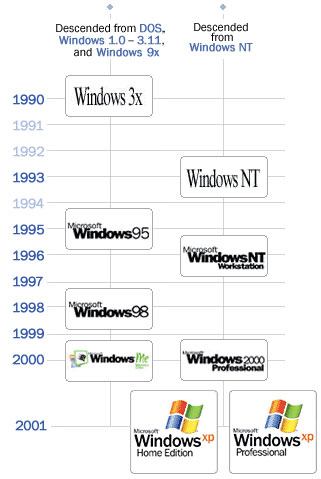
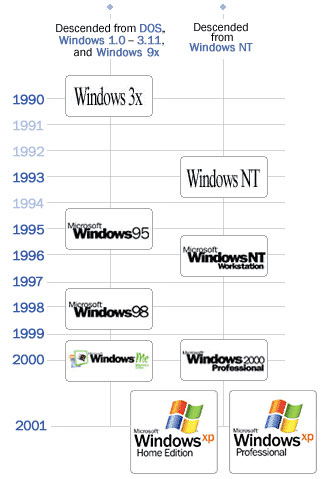
You may be interested to note that Windows XP, at the time of the launch of Vista, will be Microsoft's longest running Windows operating system, while Windows Me was the shortest surviving (no surprises there then).

Sunday, May 21, 2006

File Sharing Risks

If you're a regular to this blog you have, no doubt, heard me expound upon the risks of file-sharing. This is using programs like Limewire, Kazaa, BitTorrent, Bearshare, Morpheus and others to obtain free music or films via the internet. I came across this article recently and anyone who has a PC connected to the internet should take the time to read it as it provides a succinct summary of the risks of using such software.

Some other links that provide details of file sharing risks are here, here, here and here.

Thursday, May 18, 2006

New Generation Optical Storage

One storage option that you can skip for now is the recently introduced Blu-ray drive from Samsung, the eloquently named SH-B022 BD Writer, pictured below, among the first of a new generation of drives that can write up to 50GB (more than 10 DVDs) onto a single disc. This is done using a blue laser (hence the Blu-ray moniker) rather than the red lasers found in current CD and DVD writers. This is analogous to using a finer-tipped pen for writing, thus allowing more words to be written to a page.

The main driver for such high capacity storage discs is High Definition TV (Or HDTV as it has become known). With the advent of HDTV, which will be available in Ireland from SKY later this year, current DVD discs do not have sufficient storage capacity for a two-hour movie. So a new format needed to be found for storing HD movies. Unfortunately two solutions were found: Blu-ray, which was developed by a consortium comprised of Apple, Dell, Hewlett-Packard, Hitachi, Panasonic, Samsung, Sharp, Sony, Warner Brothers and Walt Disney, among others - all heavy hitters in the electronics/entertainment industries; and HD-DVD or High Definition Digital Versatile Disc, which was developed by Toshiba and supported by NEC, Sanyo, Microsoft, Intel, Paramount Pictures and Universal studios.

Many of you may remember a similar situation back in the early eighties when two formats of video recorder were introduced simultaneously: Betamax by Sony and VHS by JVC. In that battle the technically superior Betamax format lost out to VHS after a number of years of bitter competition. The lesson that should have been learned from that debacle is that only one format will win the battle if the two are non-compatible - as was the case with Betamax and VHS and as is the case with Blu-ray and HD-DVD (the latter discs only store 15GB of data as opposed to Blu-ray's 50GB).

Like all new technologies the early adopter pays a premium for the privilege of being among the first to use it. Samsung's new Blu-ray writer will set you back €850, and you'll have to pay €46 for each blank 50GB disc - not for the faint-hearted. However, expect prices to drop significantly in the future for whichever format wins the war. Back in August 2001, less than 5 years ago, a Pioneer DVR-A03 DVD writer for your PC would have cost you €960 ex-VAT! For now, look elsewhere for a backup solution.

Sunday, May 14, 2006

Change of Image

We're in the process of re-designing the PC Medic blog, so you may see a few changes in appearance over the next few weeks. Let us know via the comments whether you like/dislike the new designs.

Saturday, May 13, 2006

Online Storage

When it comes to backing up your data it's generally a case of "I'll get around to it tomorrow". I'd be the first to admit that data backup is not the most interesting thing that you can do on your PC, but it has to be done if you want to ensure that you don't finish up losing some important files at some point in the future.

One of the reasons we don't back up our data more frequently than we should is that we don't always have a convenient and suitable place to copy the data to. Floppy disks are unreliable and hold very little data (1.44MB). CD's and DVDs are reliable and hold between 650MB and 4.7GB but aren't always to hand when you want to backup your data. A second hard disc drive, preferably an external one is the ideal solution, but not many users have an external hard disc drive.

If you have a broadband internet connection there is another option open to you and, depending on how much data you want to back up, it need not cost you a penny. The possible solution to your backup problems is online storage. There are now a wide range of companies that will offer online storage, which involves uploading your precious data to the data storage company's servers. Once the data has been uploaded you can retrieve it at any time, so if your computer suffers a catastrophic failure at some point in the future, resulting in total data loss, you can be sure that your data is OK and you can download it to your PC again once it has been repaired. An added benefit of storing your data online is that no matter where you are in the world, once you have access to a PC with an internet connection, you can retrieve your stored data.

So, who are the main players providing this service? Well there are quite a few, each offering slightly different products, so you need to shop around for the one that suits you. Three players that you might want to check out are Xdrive, Box and Streamload. The last of these, Streamload, offers 25 GB of storage for free, though there are restrictions on how much you can download per month (100MB). If you want to download more than 100MB per month from your online data repository then you will need to sign up for one of their subscriptions - $4.95 per month increases your download allowance to 2GB per month and you get unlimited storage, as opposed to 25GB with the free service. Other subscription rates allow greater monthly download allowances.

Box also offers free storage, though only 1MB, and 5GB will cost you $4.99 per month, which is still pretty good value for the safekeeping of your data. XDrive doesn't offer free storage and comes in at $10 per month for 5GB of storage, but offers extra security for the premium price.

One service that we haven't checked ot, but which looks pretty interesting is Carbonite, check it out for yourself.

The bottom line is you need to back up your data - not necessarily all your data, but at least the data that you consider important and irreplaceable. How you do it is up to you - but with the advent of online data storage you now have a convenient and always accessible option. Check out the services that I have highlighted and Google online storage to see other potential solutions. Look carefully at the various options before selecting one that suits you.


Update: IBackup has contacted PC Medic to inform us of their service. Check out their comment below.

Tuesday, May 09, 2006

Footnote on Internet Filtering

I should have mentioned in my earlier post that those of you who use Eircom as your Internet Service Provider can avail of their Broadband Guardian service free of charge. We have had a look at this service and, considering it's free, it's not half bad. It allows you to set up an account for each user of the internet and each account can be regulated in terms of how much time the account owner can spend on the internet per day, what times they can use it at, whether they can see mature content or not, who they can e-mail and who they can chat to using instant messaging programs.

The only downside of this service is that the Netopia ADSL Modem/Routers that Eircom issue do not support Broadband Guardian without a firmware update (note that the service is only compatible with Eircom-supplied Netopia Modem/Routers). There is a firmware update wizard that we tried which didn't work - speaking to Eircom support they told us that they didn't know anyone who got the wizard to work! We had to update the firmware manually, not difficult but you need to follow the directions carefully or your router becomes a paperweight. The average computer user should never be asked to update firmware - it's like asking the average car owner to change the oil in their engine - they could probably do it with guidance, but it's not an enjoyable experience. Then again, would we expect anything different from Eircom?

Friday, May 05, 2006

Tuesday, May 02, 2006

Internet Filtering Software

A customer recently asked us if we could recommend a suitable software package to ensure that his young children could use the internet without the risk of being exposed to unsuitable sites. This was something that we hadn't looked at in detail so we decided to round up a number of packages, load them up and compare how good a job they did. The packages we reviewed were:

ContentProtect
CyberSitter
NetNanny
CyberPatrol

These packages were rated the top four internet filtering options by TopTenReviews, so we reckoned they were all worth looking at.

ContentProtect came out the #1 choice of TopTenReviews, but we ran into problems with the product refusing to save the setup configurations we chose. Because of this we couldn't give it our recommendation.

CyberSitter is a good package if the children are the only ones to use the computer. Since this program doesn't allow individual user accounts to be set up, e.g. different internet access levels for Mum/Dad, a teenage child and a pre-teen child, we can't recommend it where the PC is used by the whole household.

NetNanny is a program that you may have heard about as it was one of the first internet filtering packages available for the PC. The current version is pretty easy to set up and allows access to be configured for different types of user, a feature missing in CyberSitter. Our main gripe with this product was that it made searching the internet extremely slow - unacceptably so in our opinion.

Then there was CyberPatrol. This program ticked all the right boxes for us. It allowed each user of the PC have their own account, so that Mum/Dad can look at content that may not be appropriate for 10-year old Johnny, it did not slow down internet searches or browsing, and it was intelligent in what it filtered. For example, in a user account that was set up for a pre-teen, if the user tried to Google the word sex then Cyber Patrol would return a screen saying that the search was not allowed. However, if the same user account Googled the words sex education, then the search results would be displayed.

One point to note is that whatever package you use, none of them are infallible. Some will block what you might consider appropriate material and some will let through what you might consider inappropriate material. They are not a substitute for keeping a close eye on what your younger children are trying to see on the Internet.